

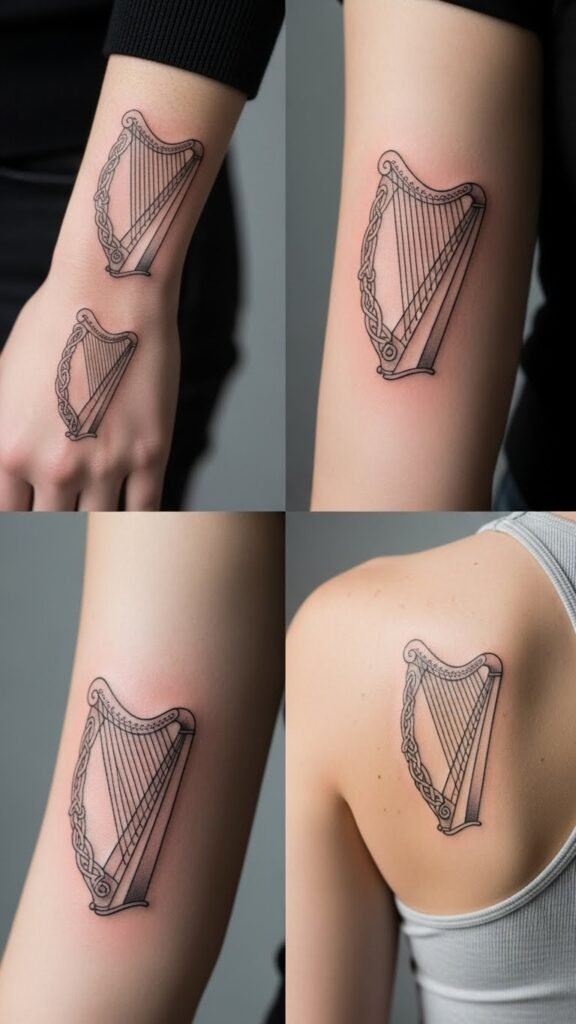
Irish harp tattoos carry deep cultural meaning. They reflect heritage, pride, and timeless symbolism tied to Irish identity. These designs work beautifully across styles, from minimal outlines to ornate detailing. Whether you prefer subtle ink or bold statements, harp tattoos adapt well to different budgets, placements, and skill levels. This guide shares practical ideas you can bring to a local artist or try as inspiration for custom designs. Each concept keeps things simple, meaningful, and achievable.
1. Classic Celtic Harp Outline
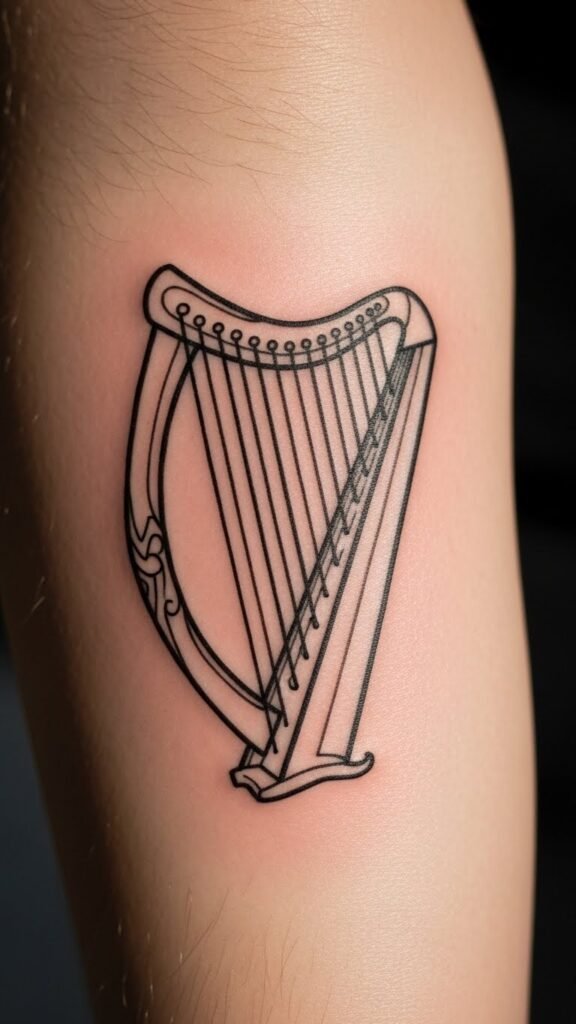
A clean harp outline never feels overdone. This style relies on crisp lines and balanced proportions. It works well on arms, calves, or along the ribcage. Because shading is minimal, sessions stay shorter and more affordable. Many artists already have outline templates you can adjust.
You can personalize it by adjusting string spacing or curve depth. Thinner lines feel subtle. Slightly thicker lines add weight without extra cost. This design also ages well since it avoids heavy fill areas.
If budget matters, ask for stencil-only work with light touch-ups later. This lets you build on the design over time. Simple outlines suit first tattoos and remain easy to expand with symbols later.
2. Minimal Wrist Harp
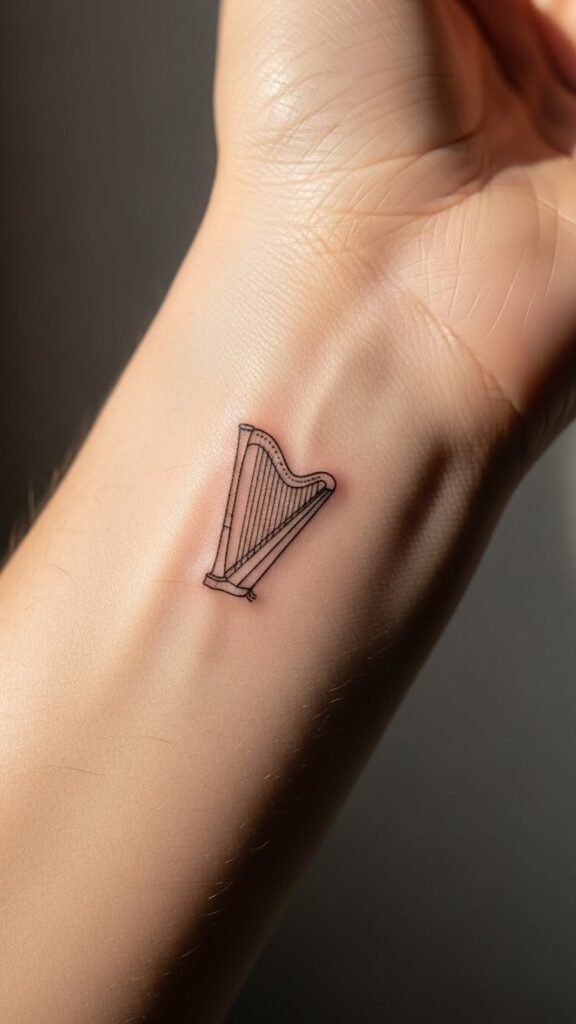
Wrist harp tattoos keep things quiet yet meaningful. The small scale keeps pricing low and healing easy. Artists often finish these in under an hour. Placement near the pulse adds personal significance.
Stick to thin lines and avoid shading to prevent blur over time. A single curved frame with three or four strings reads clearly at small size. This style fits well with everyday wear.
For DIY planning, sketch the harp using simple arches and straight lines. Bring the idea to your artist and adjust spacing together. This approach keeps costs predictable and results clean.
3. Ornate Royal Harp Design
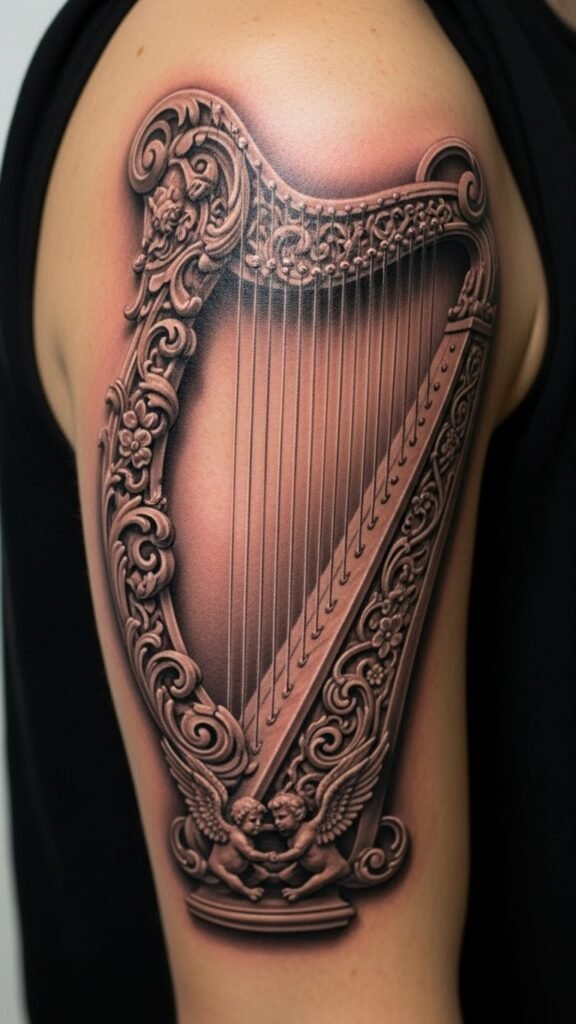
Royal harp designs feature carved edges and layered frames. They feel bold without feeling busy when spacing stays controlled. These tattoos suit larger areas like shoulders or thighs.
To manage cost, choose selective shading rather than full fill. Focus detail on the frame while leaving strings simple. This balances visual impact and session length.
Many artists reuse decorative patterns from previous work. Ask to adapt existing motifs rather than designing from scratch. That saves time and keeps results polished.
4. Harp With Celtic Knot Strings
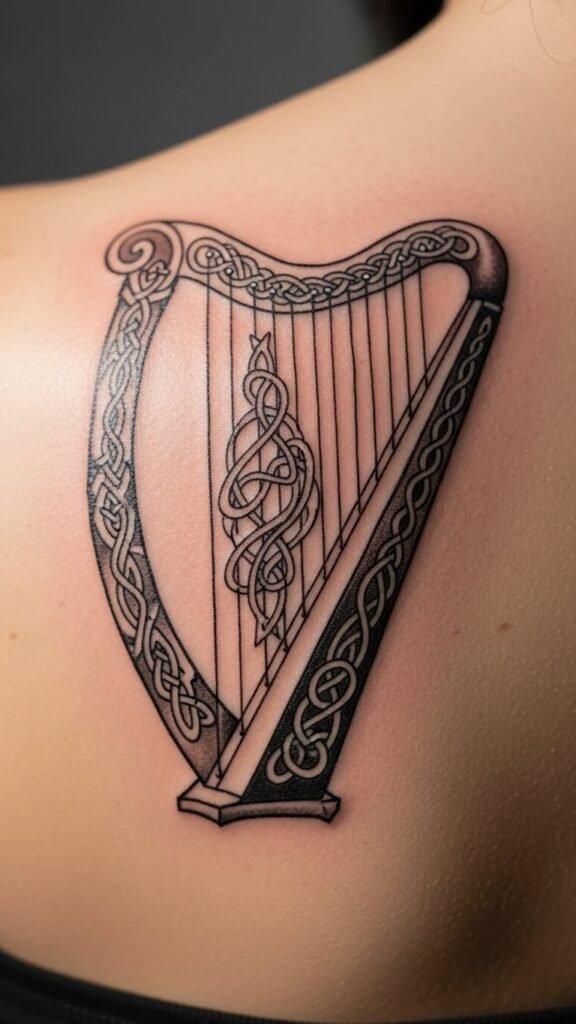
This idea merges two classic Irish elements. Knotwork strings replace straight lines, adding texture without clutter. It suits medium placements like forearms or shoulder blades.
Keep knot spacing wide to avoid ink spreading. Thin, steady lines help the design stay readable. Artists often charge less when patterns repeat evenly.
If you want flexibility, start with standard strings. Add knot accents later during a follow-up session. That spreads cost and lets you adjust the look over time.
5. Traditional Blackwork Harp
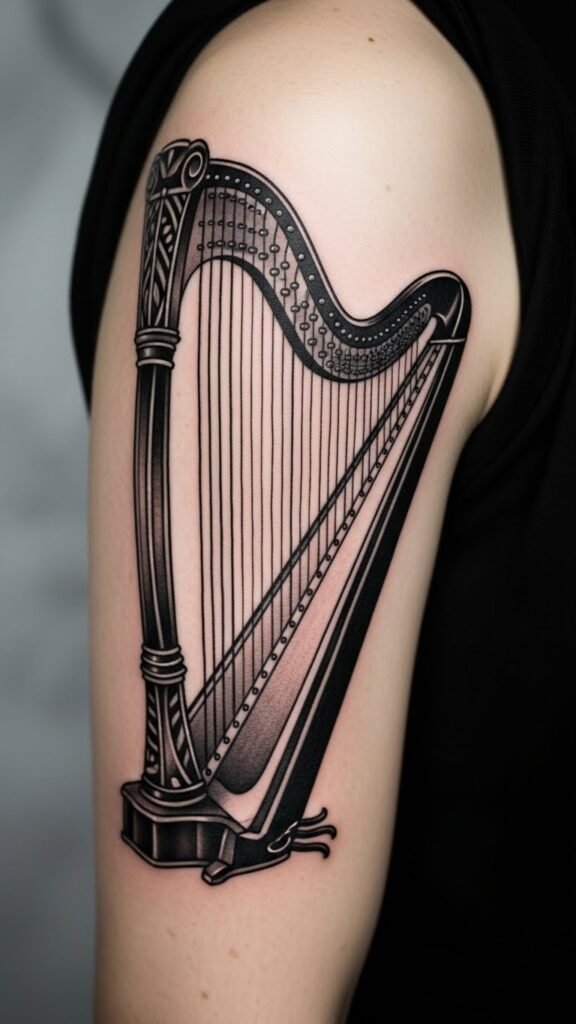
Blackwork harp tattoos make strong statements. Solid areas frame the harp shape and give long-term clarity. This style works best on flatter skin areas.
To keep costs reasonable, limit heavy fill to the outer frame. Leave inner areas open. Healing becomes easier, and sessions stay shorter.
Blackwork pairs well with other symbols later. You can expand the design without reworking existing ink.
6. Harp With Claddagh Accent
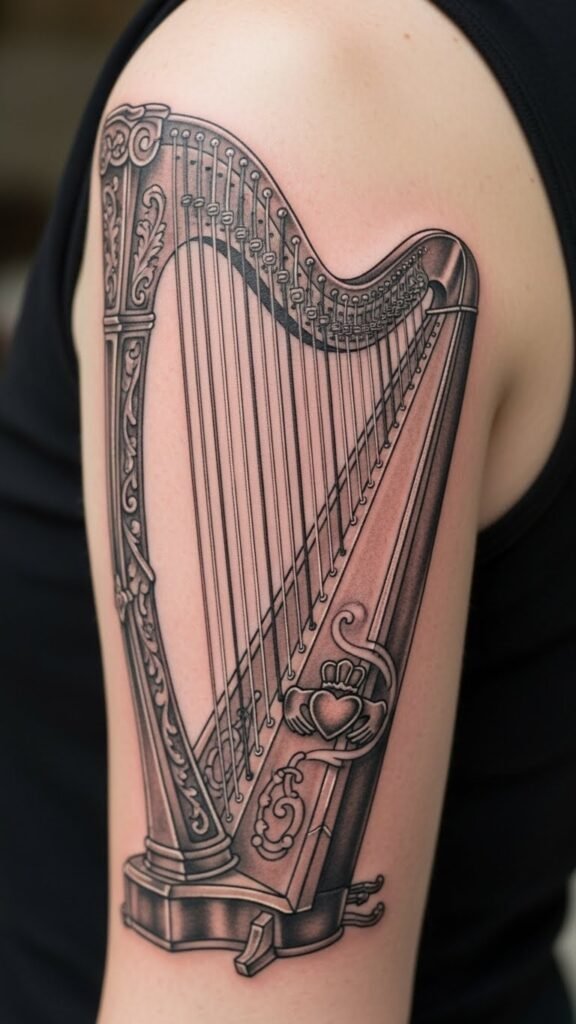
Adding a Claddagh brings themes of loyalty and love. Place it at the harp base or top curve. This small detail adds meaning without extra complexity.
Ask your artist to simplify the crown and hands for clarity. Clean shapes reduce session time. This keeps pricing approachable.
7. Line Art Shoulder Harp
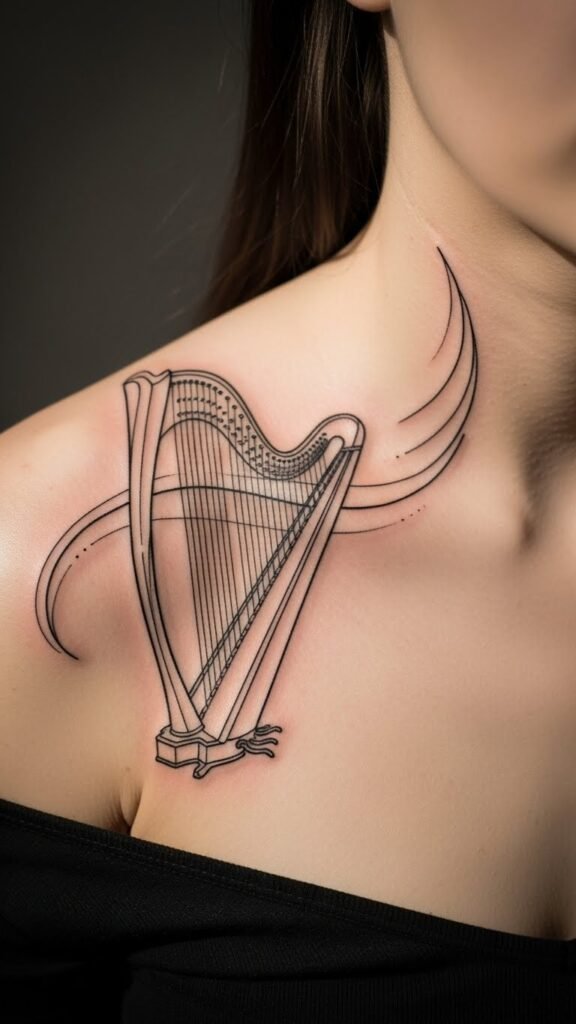
Line art designs follow body movement. On the shoulder, the harp frame can curve naturally. This creates flow without heavy shading.
Line-only tattoos cost less and heal faster. They also allow later additions if you change your mind.
8. Harp With Irish Floral Touch
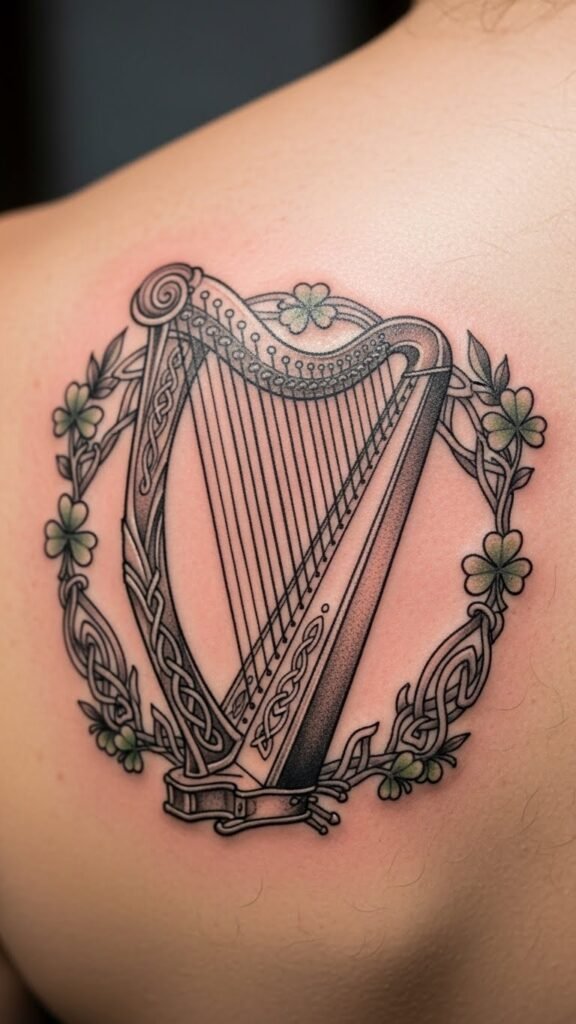
Small florals soften the harp’s structure. Keep petals minimal to avoid crowding. This style fits arms and upper back areas.
Choose one flower type to maintain balance. Fewer elements mean lower cost and easier upkeep.
9. Medieval Harp Inspired Design
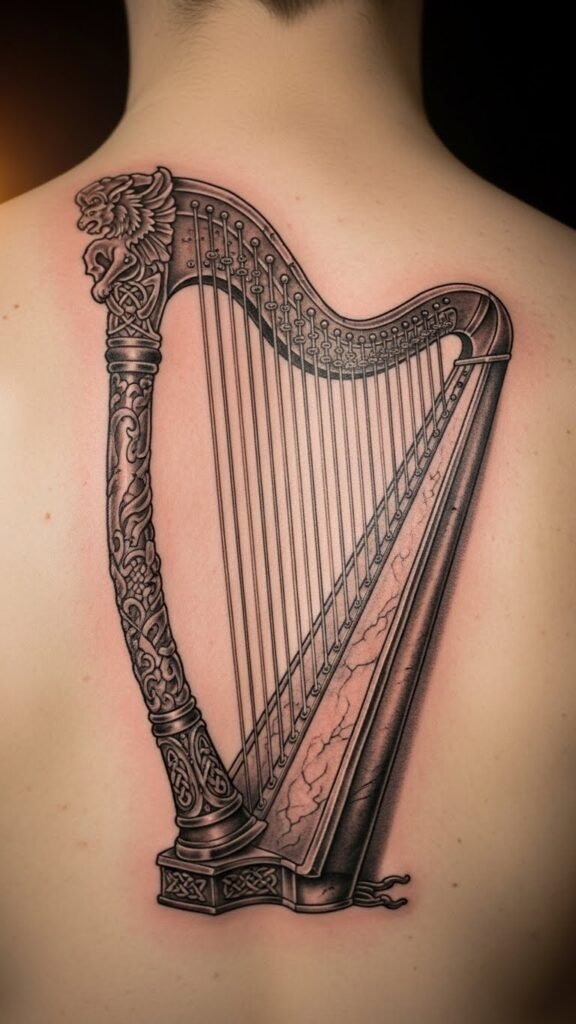
Medieval harps have thicker frames and shorter strings. This creates a grounded look. Artists can reference historical sketches for accuracy.
Limit texture shading to outer edges. This keeps the tattoo readable and session length manageable.
10. Harp With Gaelic Motifs
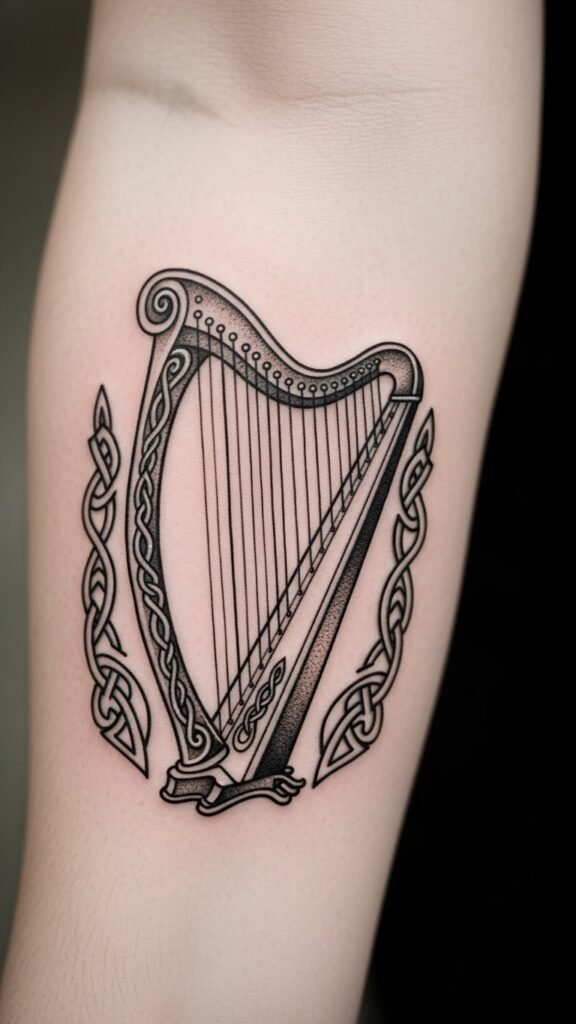
Geometric motifs add structure without filling space. They frame the harp and add rhythm.
Repeating patterns cost less than custom scenes. Ask for symmetry to speed the process.
11. Fine Line Ankle Harp
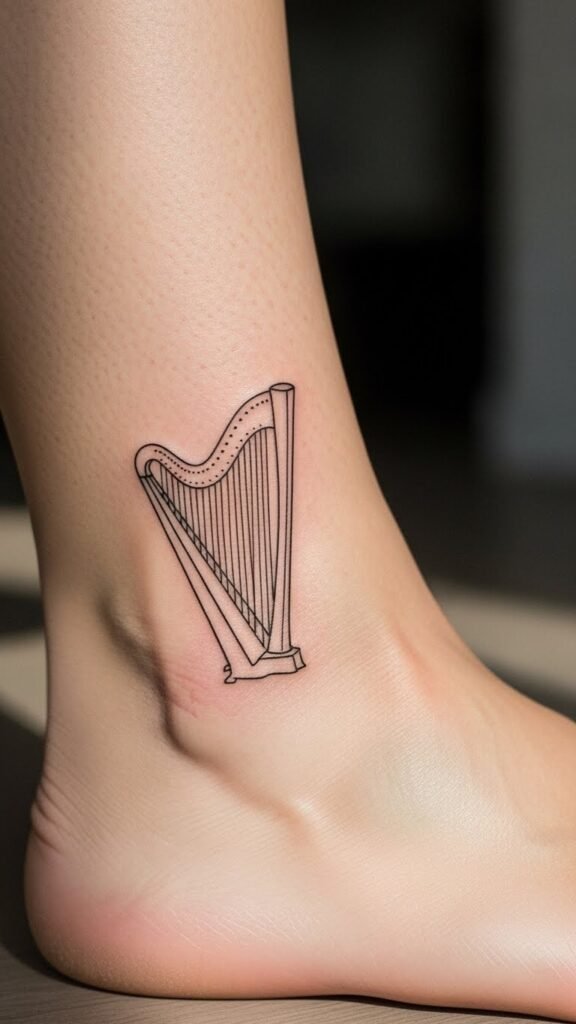
Ankle placements stay discreet. Fine lines keep the design light. This option works well for limited budgets.
Avoid heavy detail to prevent fading from movement. Simple designs last longer here.
12. Harp With Trinity Knot Base
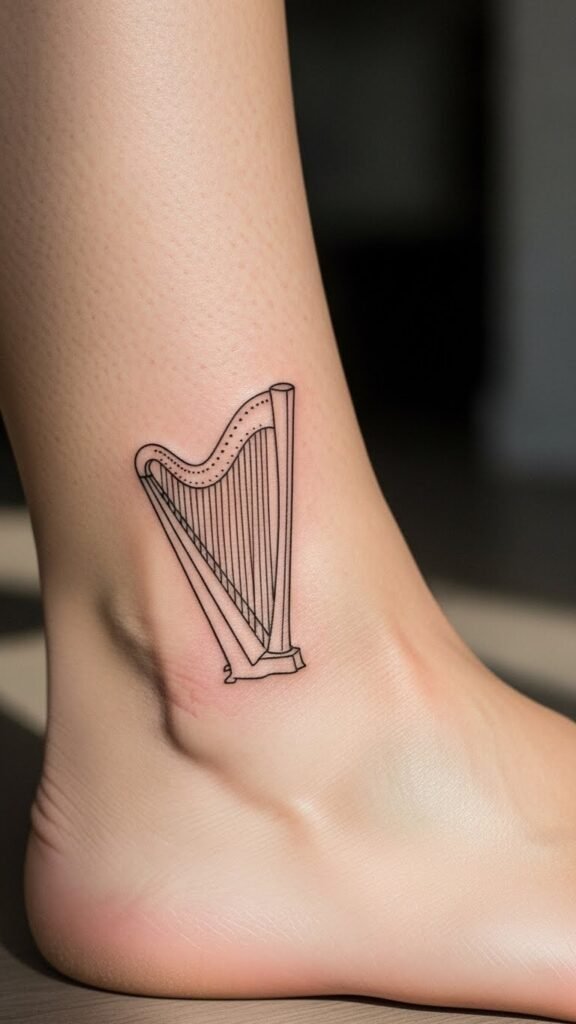
The Trinity knot grounds the harp visually. Place it at the base to anchor the design.
This combination remains compact and meaningful. It suits medium placements and keeps pricing steady.
13. Vintage Engraving Style Harp
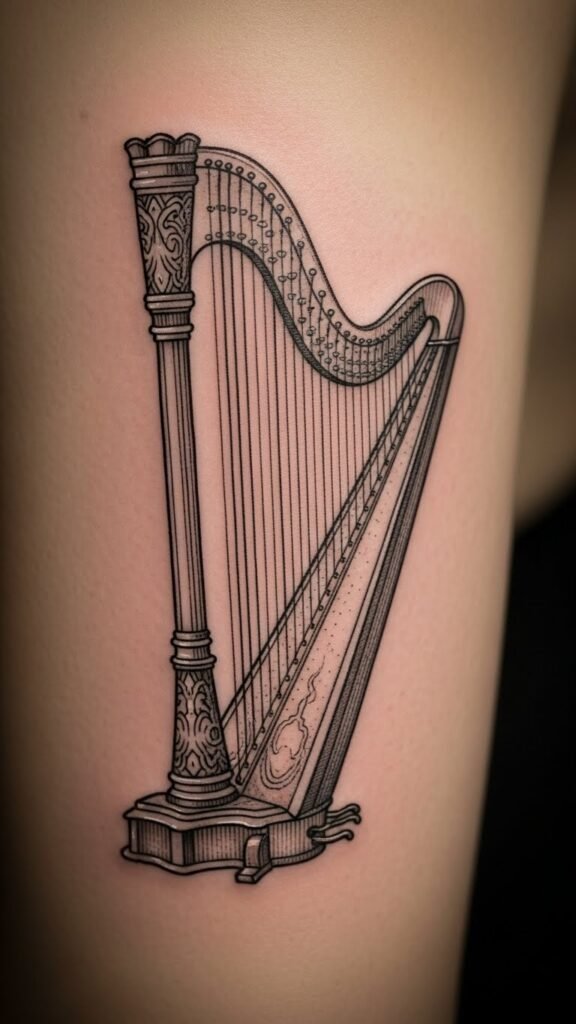
Engraving styles use thin texture lines. They feel classic without heavy fill.
Ask your artist to keep hatching light. This reduces time and avoids overworking skin.
14. Harp With Shield Frame
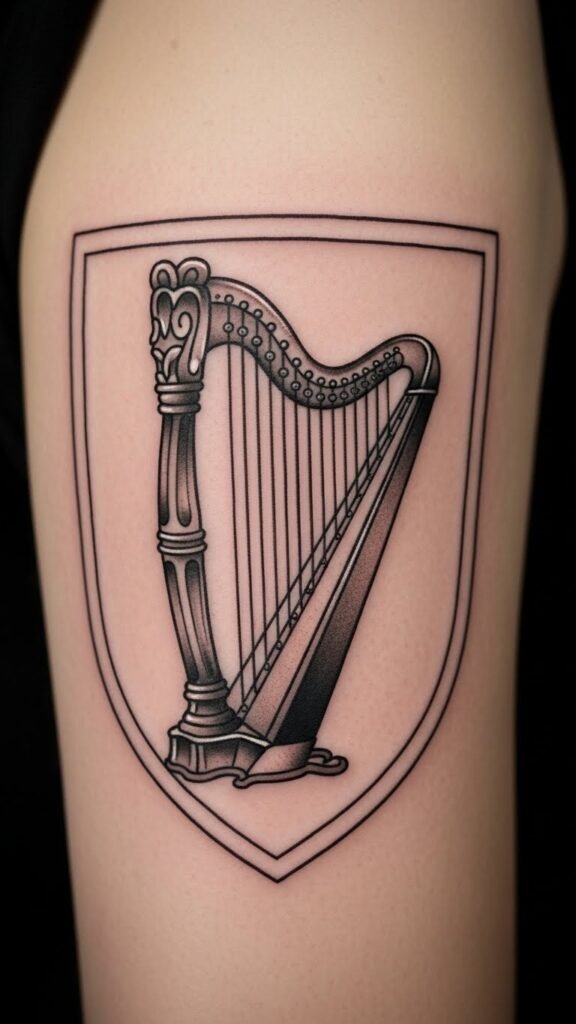
Shield frames suggest heritage and protection. Simple outlines work best.
Avoid complex heraldry to keep costs controlled.
15. Small Behind-the-Ear Harp
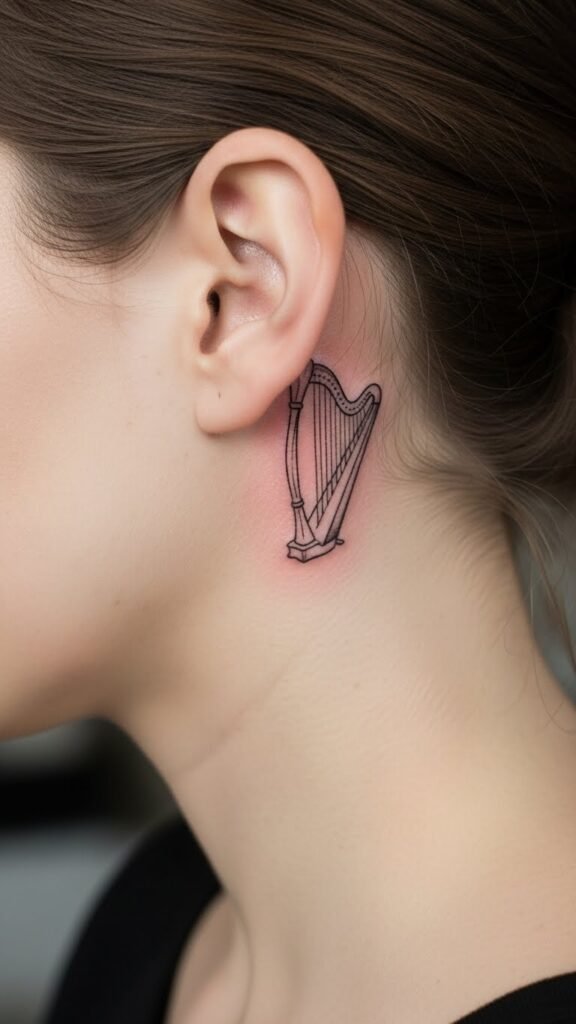
Tiny placements suit very simple designs. Keep string count low.
This style heals quickly and stays subtle.
16. Harp With Circular Celtic Border
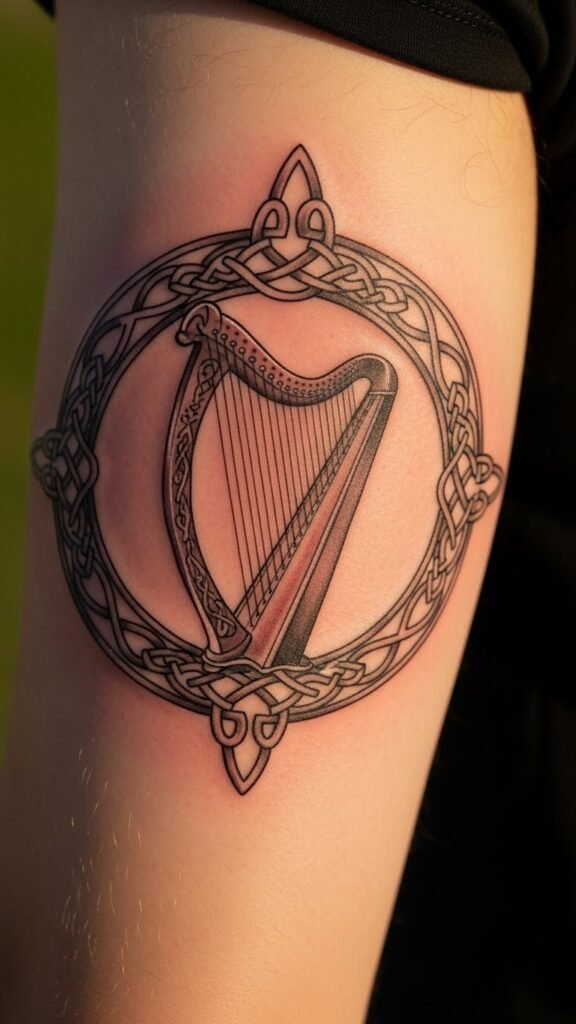
Circular borders create balance. Even spacing keeps things tidy.
Circles are quick for artists, which helps pricing.
17. Harp With Stone Texture Frame
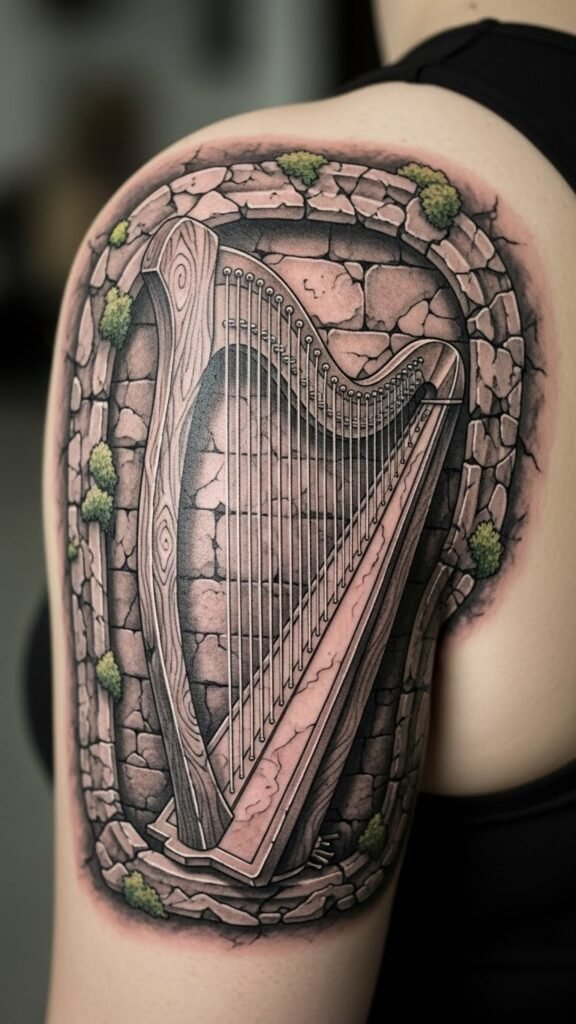
Stone textures add weight. Keep texture limited to edges.
This avoids long sessions and heavy ink use.
18. Harp With Banner-Free Base
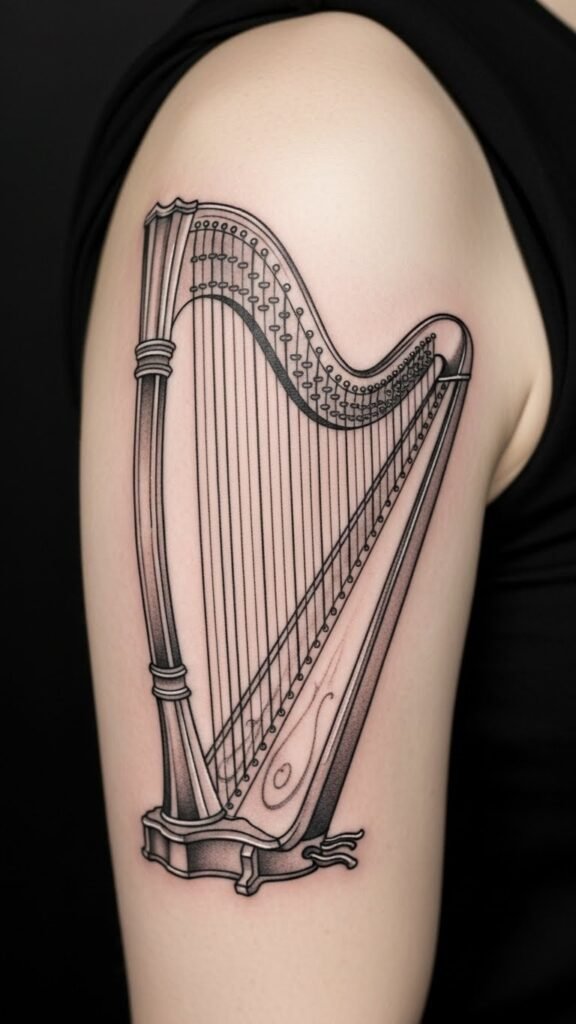
Avoiding banners keeps focus on form. It also keeps costs lower.
This design remains timeless and adaptable.
19. Symmetrical Chest Harp
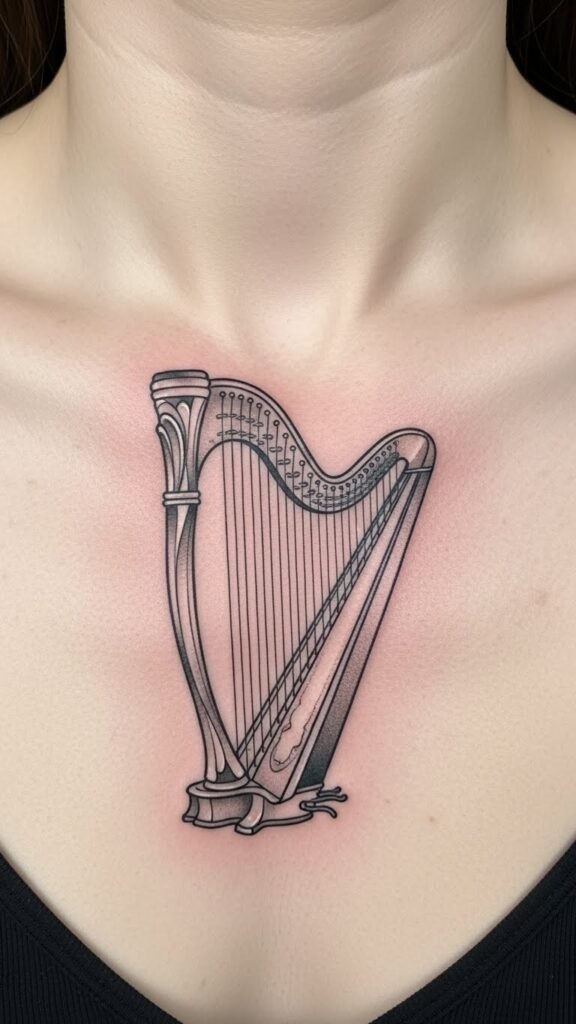
Chest placements suit symmetry. Keep the design mid-sized.
Simple layouts heal more evenly here.
20. Harp With Dotwork Shading
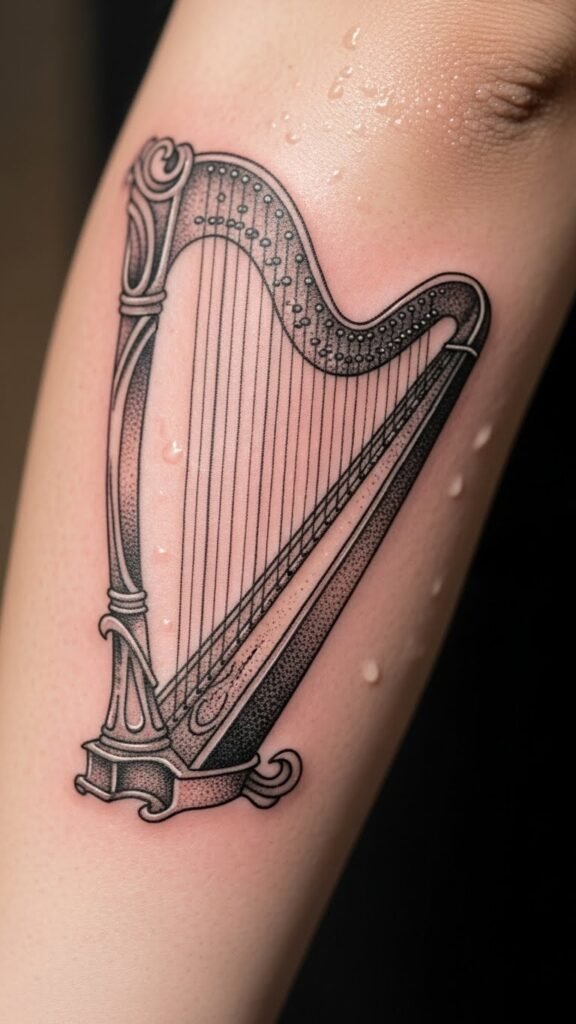
Dotwork adds depth without heavy ink. Use it sparingly.
Dot shading spreads sessions evenly, helping budget control.
21. Harp With Irish Wave Curves
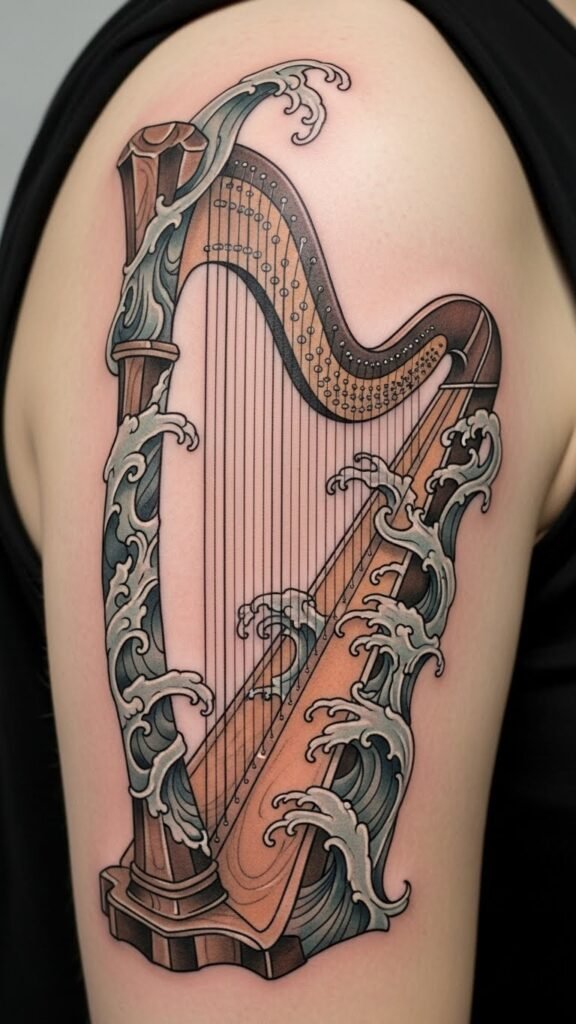
Wave lines soften the harp shape. They suit arm placements.
Flowing lines take less time than dense detail.
22. Harp With Stone Cross Accent
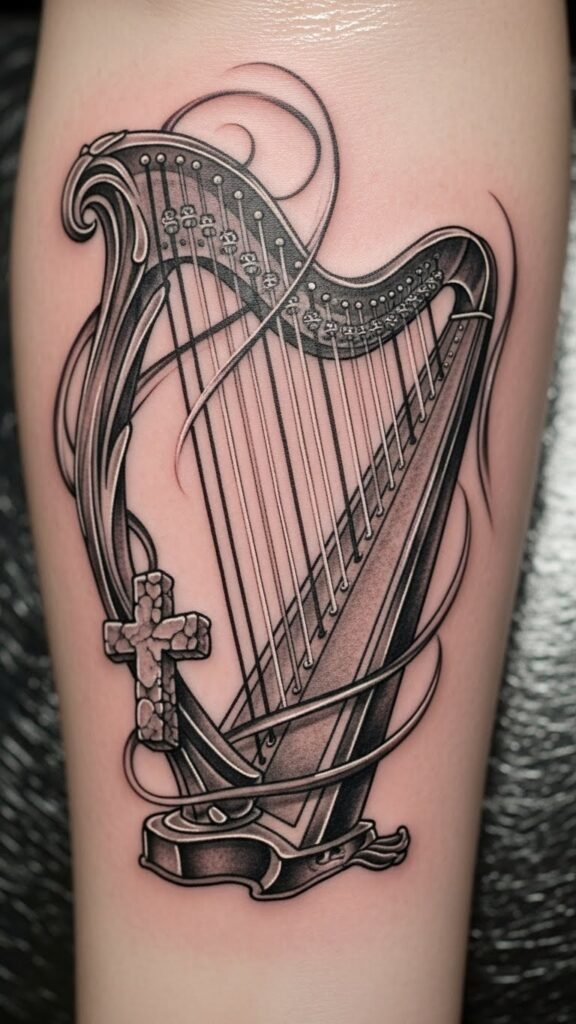
Cross accents add historical depth. Keep them small for clarity.
This pairing stays respectful and simple.
23. Negative Space Harp
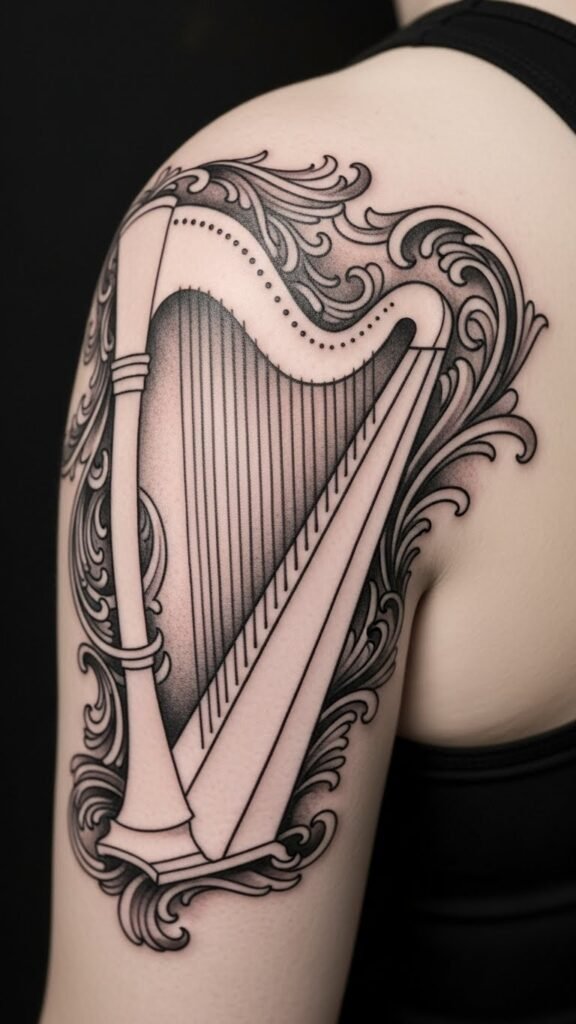
Negative space keeps designs light. It reduces ink use and healing time.
This style ages well with proper spacing.
24. Harp With Border Dots
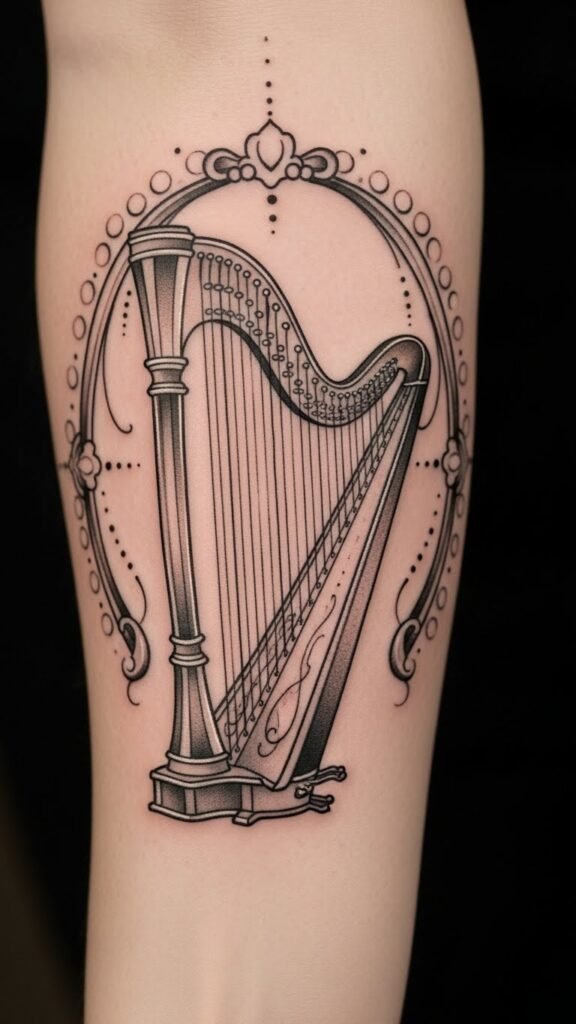
Dot borders add rhythm. They are quick to apply.
Spacing keeps the design breathable.
25. Harp With Scroll Base
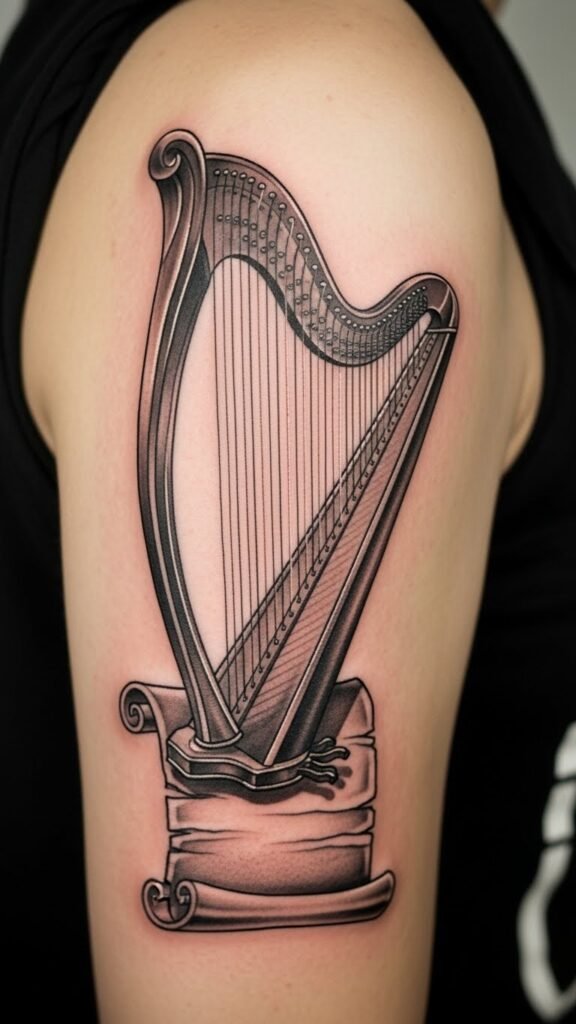
Scroll bases add structure. Skip lettering to stay within guidelines.
This design works well on forearms.
26. Harp With Minimal Shadow
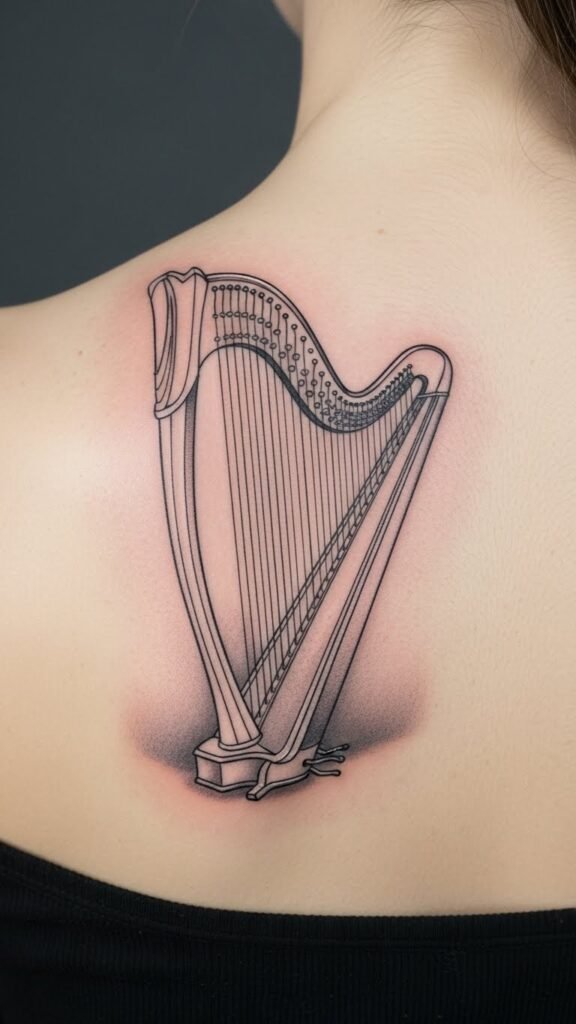
Light shadow adds depth without fill. It keeps the tattoo clean.
This approach shortens sessions.
27. Harp With Personal Initial Shapes
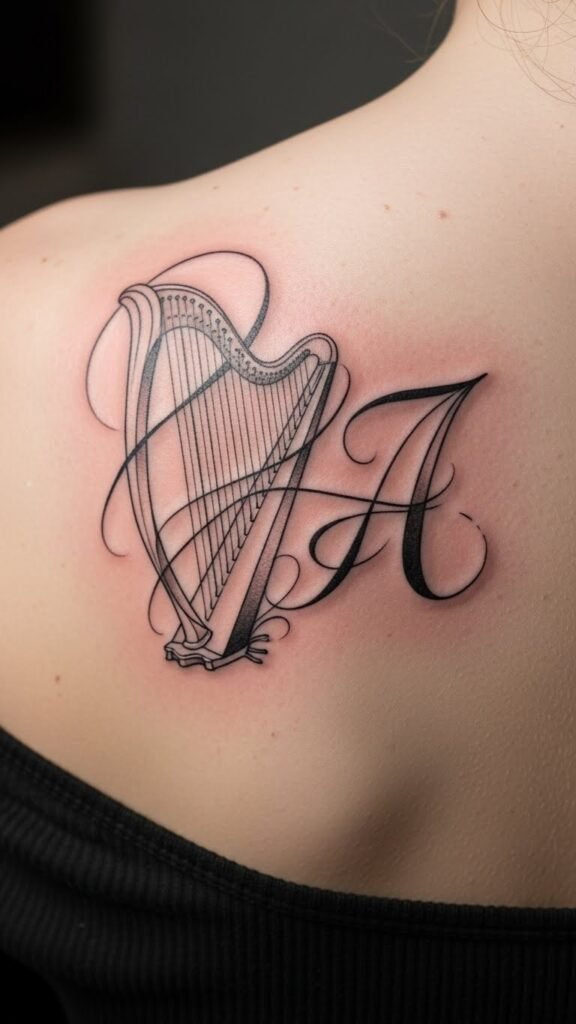
Using abstract shapes keeps things personal. Avoid readable letters.
This allows meaning without visual clutter.
Conclusion
Harp tattoos offer a powerful way to honor Irish culture through art that stays personal and practical. From clean outlines to detailed frames, each design here shows how thoughtful choices can keep costs manageable while maintaining strong visual impact. Start with simple elements, choose placements wisely, and build over time if needed. Save your favorite ideas, share them with your artist, and shape a harp tattoo that feels right for you and lasts with pride.

Leave a Reply