

Single-line tattoos have a quiet confidence. With just one continuous stroke, they can suggest movement, emotion, and story—without shouting for attention. If you’ve ever seen a single-line face or flower and felt something instantly, you already understand their power.
They’re minimal, modern, and surprisingly expressive. And the best part? You don’t need to be a master illustrator to start designing one.
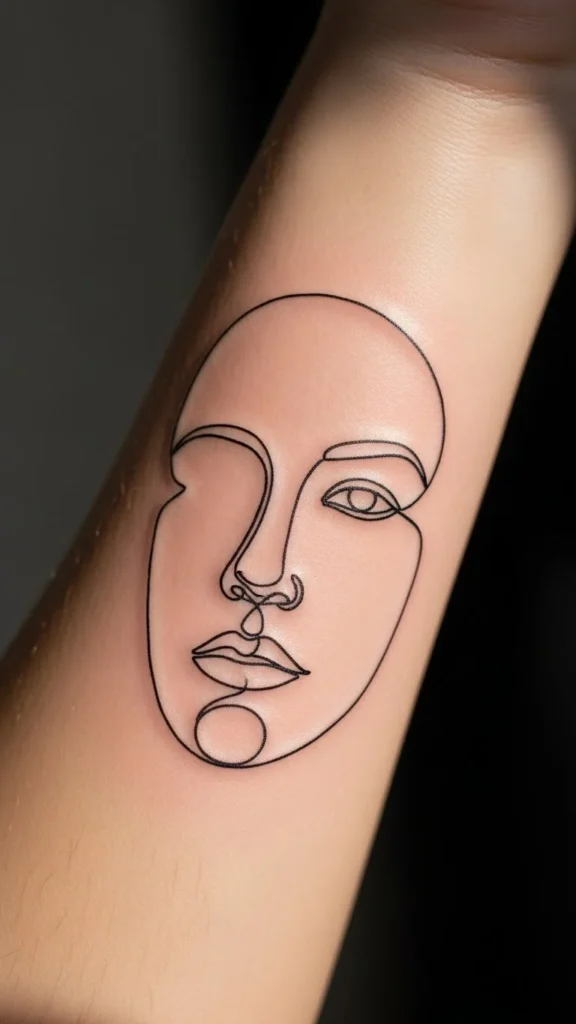
In this guide, we’ll break down how to design single-line tattoos that truly speak volumes, step by step, in a way that’s friendly, practical, and easy to save for later.
What Makes Single-Line Tattoos So Powerful?
Single-line tattoos work because they force intention. There’s no room for extra shading, heavy detail, or corrections.
Every curve matters.
Here’s why people love them:
- They feel timeless, not trendy
- They’re easy to scale small or medium
- They age well on skin
- They leave room for personal interpretation
A single unbroken line can suggest:
- A face without drawing every feature
- A flower without petals spelled out
- An animal with just a few curves
Less ink. More meaning.
Start With a Clear Idea (Not a Complex One)
The biggest mistake beginners make is starting too detailed.
Single-line designs shine when the concept is simple and emotional, not literal.
Great starting ideas include:
- Human faces or profiles
- Hands, arms, or silhouettes
- Flowers, leaves, or stems
- Animals in motion
- Abstract symbols with meaning
Before you draw, ask yourself:
- What emotion do I want this tattoo to give?
- Can this be recognized with fewer lines?
If the idea feels busy, simplify it again.
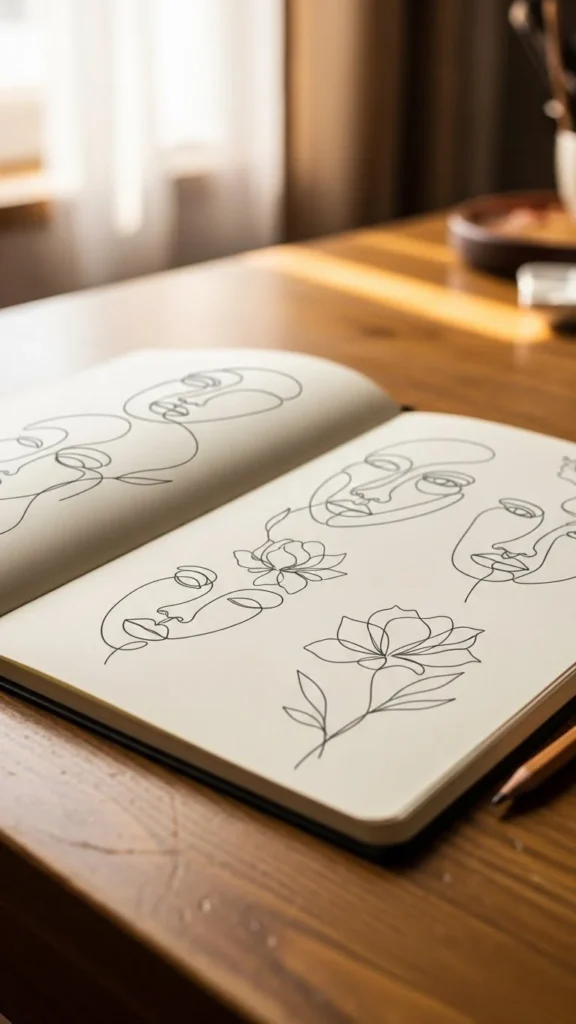
Learn to Draw Without Lifting the Pen
This is the heart of single-line tattoo design.
One line. No breaks.
A great exercise:
- Pick a subject (like a face)
- Set a timer for 2 minutes
- Draw it without lifting your pen
- Don’t erase
- Don’t restart
At first, it may look awkward. That’s normal.
Over time, your hand learns:
- When to slow down
- Where curves feel natural
- How to suggest shape without detail
Helpful tips:
- Use smooth, relaxed wrist movements
- Avoid sharp zig-zags
- Let the line flow, even if it overlaps
Imperfections are part of the charm.
Focus on Flow, Not Accuracy
Single-line tattoos aren’t about realism.
They’re about flow.
A design works when:
- The line feels continuous and intentional
- The eye can follow it easily
- There’s a rhythm to the curves
Think of your line like a quiet melody.
To improve flow:
- Practice long, confident strokes
- Avoid stopping mid-curve
- Rotate your paper instead of your hand
If a detail breaks the flow, remove it.
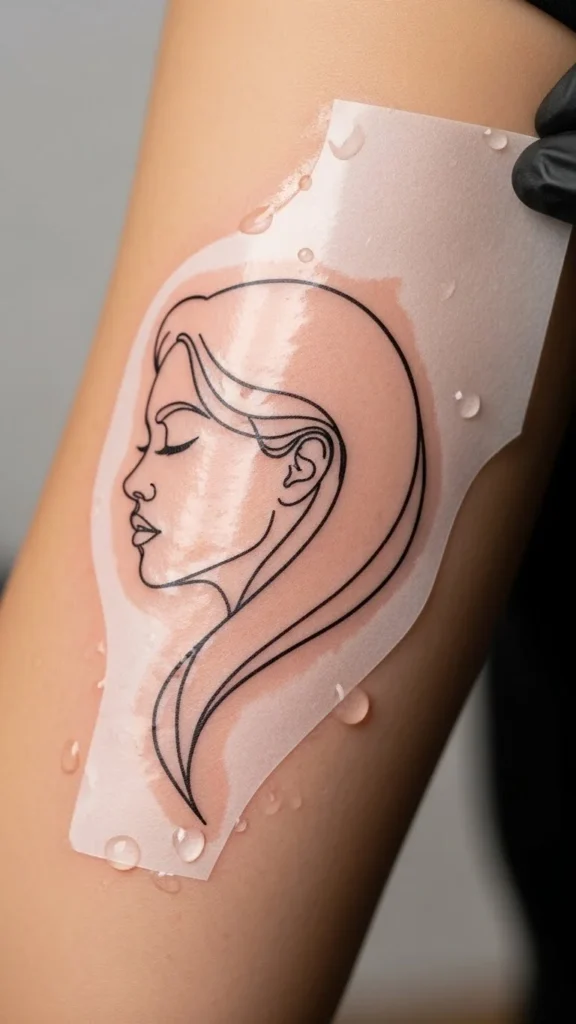
Keep the Design Skin-Friendly
What looks good on paper doesn’t always work on skin.
When designing single-line tattoos, remember:
- Lines spread slightly over time
- Ultra-thin lines can fade
- Tight overlaps may blur
Design with longevity in mind:
- Keep consistent line thickness
- Avoid tiny closed loops
- Leave breathing space between crossings
Good placements for single-line tattoos:
- Forearm
- Upper arm
- Collarbone
- Shoulder
- Ribcage
These areas let the line breathe and move naturally with the body.
Test, Simplify, Then Simplify Again
Before committing to a final design:
- Print it small and large
- View it from a distance
- Flip it horizontally
Ask yourself:
- Does it still read clearly?
- Does the emotion come through?
- Can one curve be removed?
The strongest single-line tattoos often look almost too simple at first glance.
That’s a good sign.
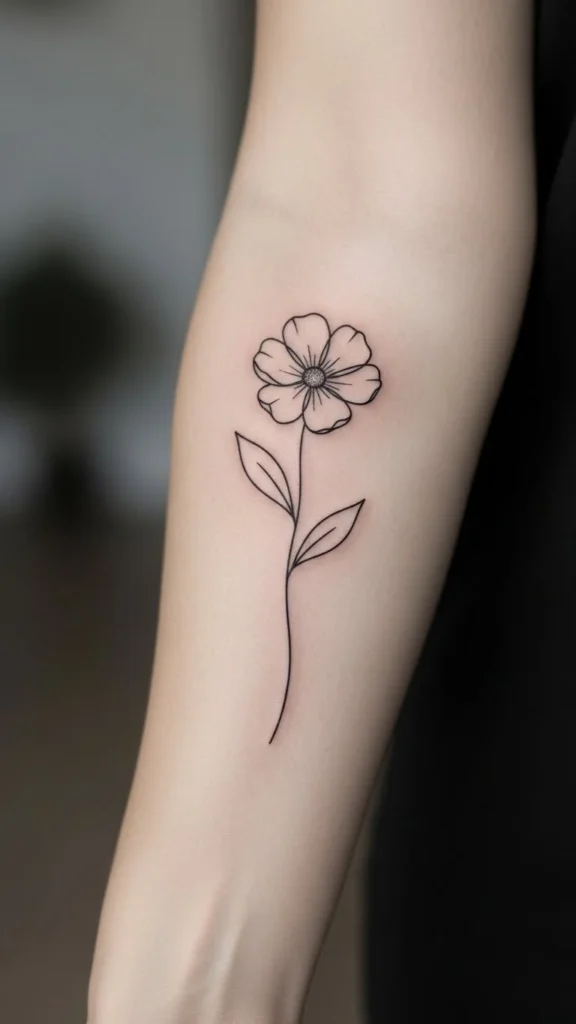
Turn Practice Into Personal Style
As you practice, patterns will appear in your work.
Maybe you lean toward:
- Soft feminine curves
- Bold abstract loops
- Clean geometric flow
That’s your style forming.
To develop it:
- Redraw the same subject multiple ways
- Limit yourself to one continuous stroke
- Study real tattoos, not just illustrations
Over time, your lines will start to feel recognizable—even without a signature.
Final Takeaway
Single-line tattoos prove that less truly can say more.
With one unbroken line, you can tell a story, express emotion, and create something deeply personal. Focus on flow, simplify relentlessly, and let imperfections become part of the beauty.
If you found this helpful, save this guide for later, grab a pen, and start drawing—one line at a time.

Leave a Reply