

Tiny abstract tattoos are everywhere right now—and for good reason. They’re subtle, modern, and endlessly customizable. You don’t need to be a professional tattoo artist to start sketching ideas that look tattoo-ready. With the right approach, a few simple tools, and a minimalist mindset, you can create tiny abstract designs that feel intentional instead of random.
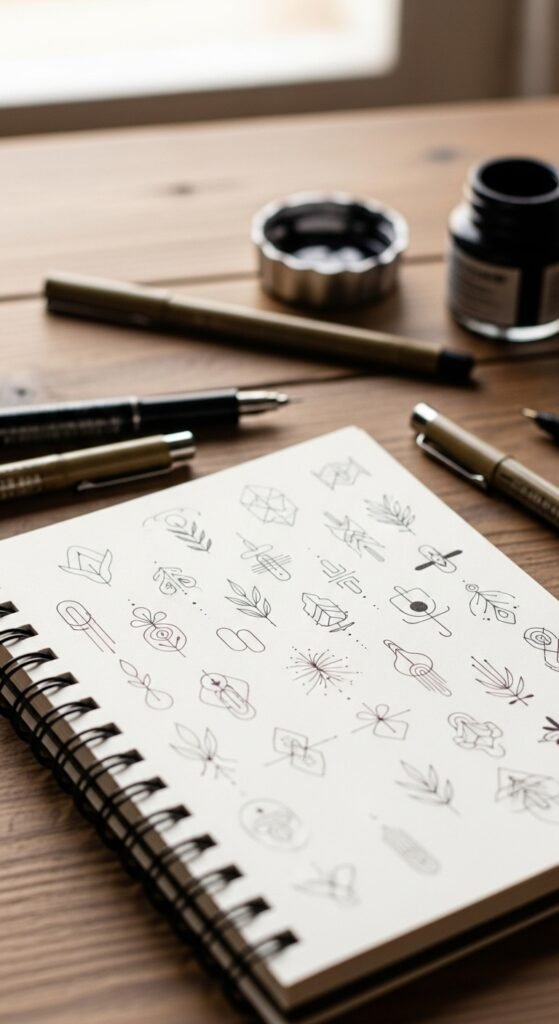
This guide walks you through the process step by step, whether you’re drawing for fun, planning your first tattoo, or building a flash sheet. Keep it simple. Keep it clean. And most importantly—trust your lines.
Understand What Makes Abstract Tattoos “Work”
Abstract doesn’t mean messy. The best tiny abstract tattoos usually share a few common traits:
- Clean, confident lines
- Simple shapes with breathing room
- Intentional negative space
- Balance, even when asymmetrical
Before you draw anything, spend time observing. Look at minimalist tattoos, modern art, or even everyday objects like shadows, cracks, and plant stems. Abstract inspiration is everywhere once you start noticing flow instead of detail.
A helpful mindset shift: you’re not drawing objects. You’re drawing movement, rhythm, and mood.
Start With the Right Tools (Keep It Basic)
You don’t need expensive supplies. In fact, limiting your tools helps keep your designs small and focused.
- Smooth sketchbook or plain printer paper
- Pencil for loose planning
- Fine-line pen (0.3 or 0.5 works well)
- Optional: tracing paper
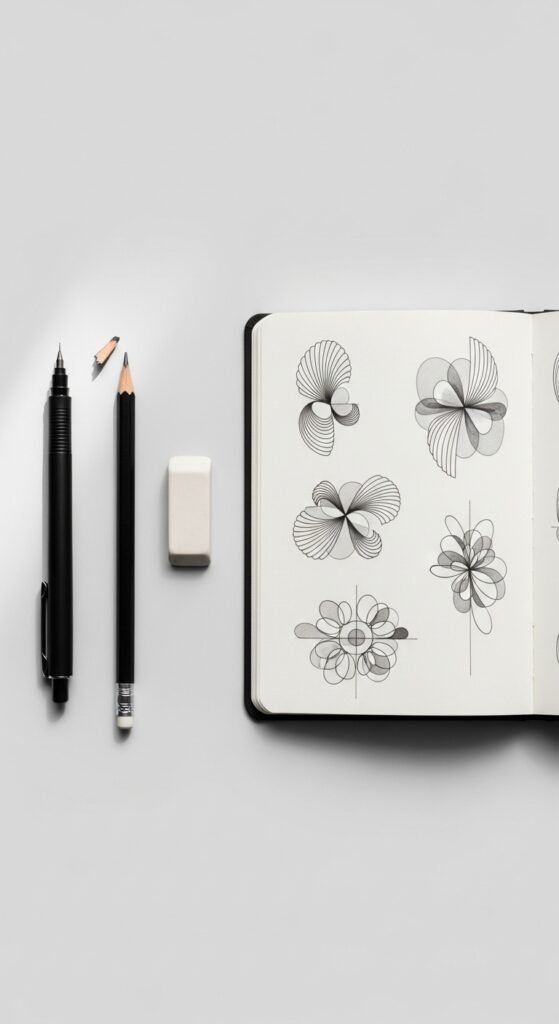
Avoid markers or thick pens early on. Tiny tattoos rely on precision. Thin lines train your hand to stay controlled.
Build Designs From Simple Shapes
Most trendy abstract tattoos are built from very basic forms. Start here:
- Single-line curves
- Dots and micro circles
- Short parallel lines
- Soft zigzags
- Open-ended shapes
Try this exercise:
- Draw one continuous curved line.
- Add one small element—dot, dash, or short line.
- Stop.
That’s it. Overworking is the fastest way to lose the “tiny tattoo” feel.
If a design looks unfinished, that’s often a good sign. Abstract tattoos thrive on restraint.
Focus on Flow, Not Symmetry
Perfect symmetry isn’t required. In fact, slightly off-balance designs often feel more organic on skin.
When sketching, ask:
- Does the line move naturally?
- Would this wrap or sit nicely on a wrist, ankle, or collarbone?
- Does the eye know where to start and stop?
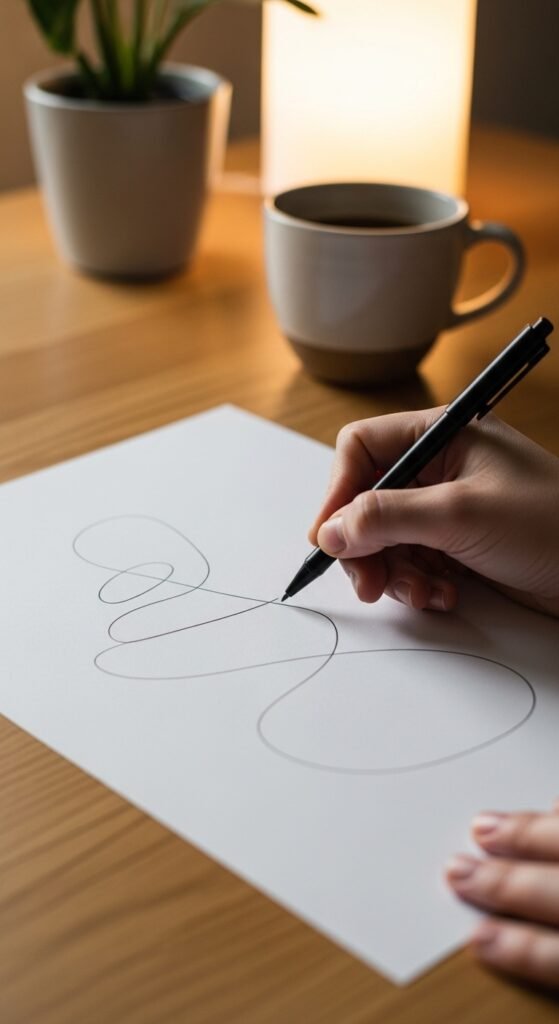
Rotate your paper often. If the design looks good from multiple angles, it’s likely tattoo-friendly.
Think Small: Scale Changes Everything
A design that looks great at 4 inches may fall apart at 1 inch. Tiny abstract tattoos demand simplicity.
Tips for scaling down:
- Avoid tight clusters of detail
- Leave space between elements
- Test by shrinking your sketch on a copier or phone
A good rule: if you can redraw it from memory, it’s probably simple enough.
Refine With Tracing (Don’t Skip This Step)
Once you have a sketch you like, trace it cleanly.
- Use tracing paper or a lightbox
- Redraw with one confident pass
- Avoid sketchy or broken lines
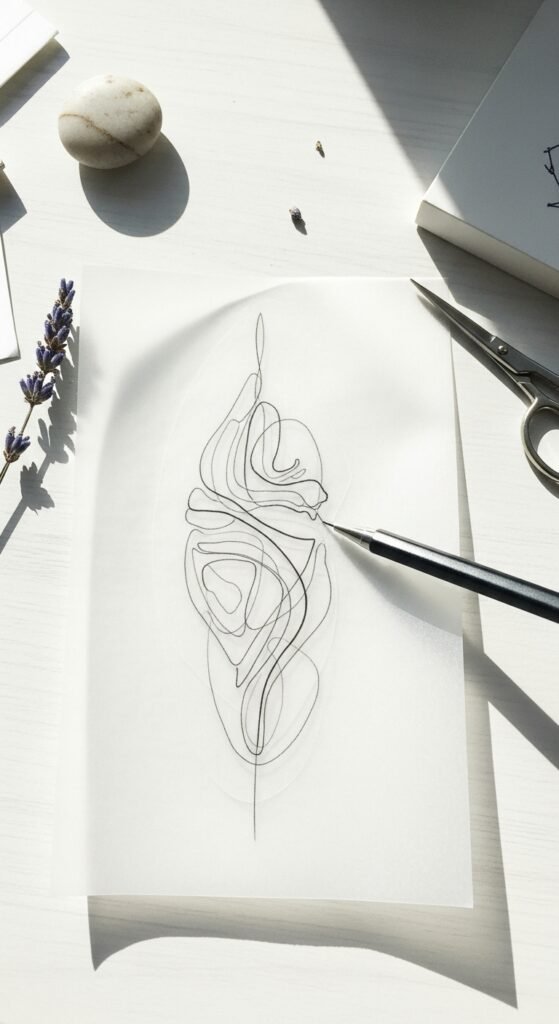
This step forces you to commit. Hesitation shows in final tattoos, even tiny ones.
Test Placement Visually
Before calling a design “done,” imagine it on skin.
Try:
- Drawing it on your wrist or ankle with a pen
- Using a photo editing app to overlay it on skin
- Printing it at actual size and taping it on
Some designs only make sense once placed. Flow matters more than perfection.
Common Mistakes to Avoid
Even simple designs can go wrong. Watch out for:
- Overcomplicating with too many elements
- Lines that end awkwardly without intention
- Designs copied too closely from trends
- Ignoring how the tattoo will age
Tiny tattoos should age gracefully. Clean lines and open space help prevent blurring over time.
Build a Small Abstract Tattoo Collection
Instead of chasing one “perfect” design, aim for a set.
Create a page of:
- 5–10 variations of one idea
- Different line weights or angles
- Similar motifs with small changes
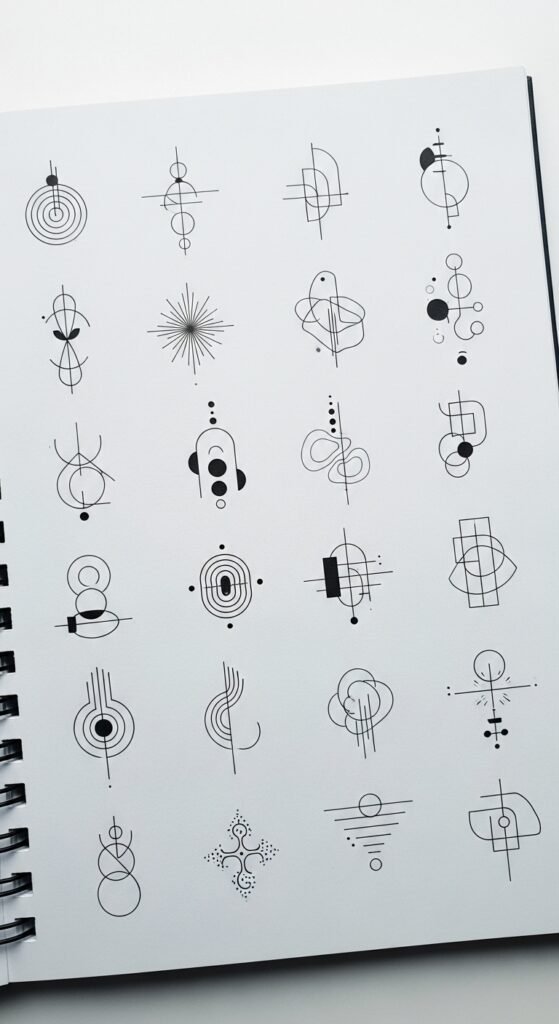
This approach improves consistency and helps you develop your own style faster.
Final Thoughts: Keep It Intentional
Tiny abstract tattoos aren’t about skill-heavy drawing. They’re about clarity, confidence, and restraint. One good line beats ten unnecessary ones every time.
Start small. Draw often. Trust your instincts. And remember—if it feels calm and intentional on paper, it will likely feel the same on skin.
Save this guide for later and start building your own tiny abstract tattoo ideas today.

Leave a Reply