

Minimalist name tattoos have a quiet power. They don’t shout for attention, yet they carry deep meaning—love, memory, identity—all wrapped in clean lines and subtle detail. When done right, they age beautifully and never feel dated. If you’re dreaming of a name tattoo that still looks elegant decades from now, this guide walks you through exactly how to design one that stands the test of time.
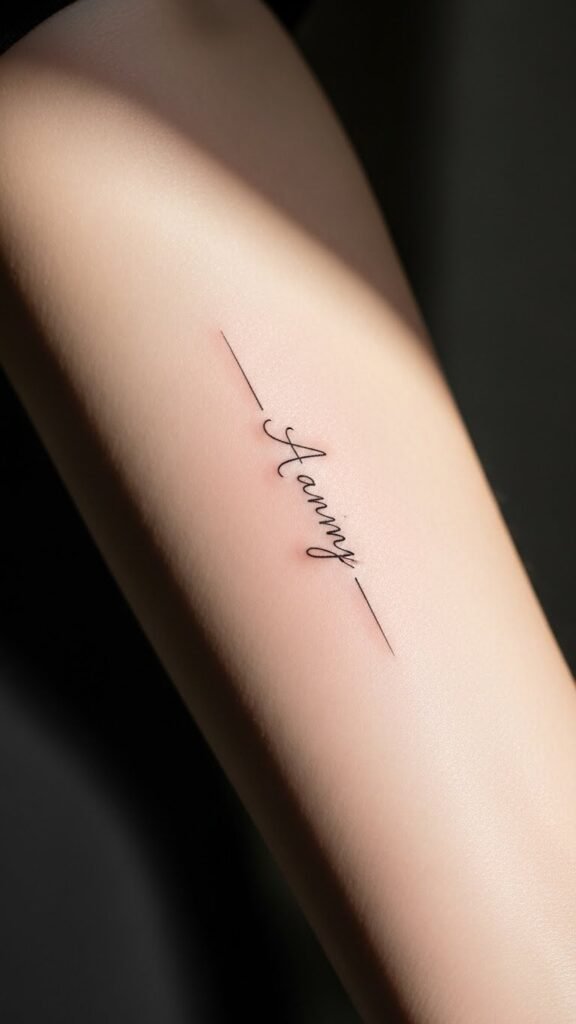
Start With the Meaning, Not the Font
Before choosing how your tattoo looks, get clear on why you want it. Minimalist designs work best when the meaning is focused and intentional.
Ask yourself:
- Is this a child’s name, a partner’s name, or your own?
- Does it represent love, remembrance, or self-identity?
- Is it something you’ll still feel connected to years from now?
Keeping the meaning simple helps you avoid over-designing. One name. One emotion. One story.
Tip: If you’re unsure, write the name down and live with it on paper or your phone background for a few weeks. If it still feels right, you’re ready.
Choose a Timeless Font Style
Typography is everything in a minimalist name tattoo. The wrong font can make even the most meaningful name feel trendy or dated.

Fonts that age well:
- Fine-line cursive: Soft, elegant, and personal
- Simple handwritten script: Feels intimate and organic
- Clean serif fonts: Classic and balanced
- Minimal sans-serif: Modern without being flashy
Fonts to avoid:
- Overly decorative scripts
- Heavy block lettering
- Trend-driven styles that spike on social media
Less ink = more longevity. Thin, consistent lines keep the tattoo looking refined as skin naturally changes over time.
Keep the Design Clean and Uncluttered
Minimalist tattoos thrive on restraint. A single name often looks strongest on its own.
Instead of adding lots of extras, focus on:
- Balanced spacing between letters
- Smooth line flow
- Natural proportions
If you want a small accent, keep it subtle:
- A tiny heart dot over an “i”
- A fine underline
- A barely-there symbol at the end of the name
Avoid stacking too many elements. The cleaner the design, the more timeless it feels.
Pick Placement That Enhances Simplicity
Placement can elevate—or overwhelm—a minimalist name tattoo. The best spots allow the design to breathe.
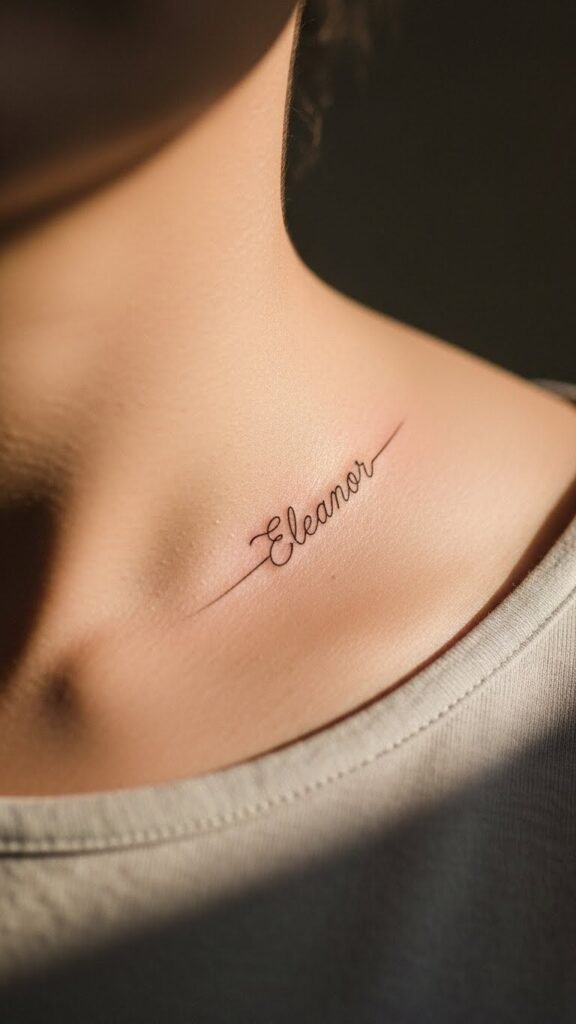
Popular minimalist placements:
- Inner forearm
- Wrist (side or inner)
- Collarbone
- Ribcage
- Behind the ear (very small designs)
Think long-term:
- Areas with less friction age better
- Flat surfaces keep lettering crisp
- Spots you can cover or show easily give flexibility
Ask your artist to stencil the design in multiple locations before deciding. Seeing it on your body changes everything.
Size Matters More Than You Think
Tiny doesn’t always mean better. If a name tattoo is too small, it can blur over time.
A good rule:
- Letters should be clear and readable, even from a short distance
- Thin lines need enough space between them
- Avoid squeezing long names into tiny areas
Pro tip: Slightly larger minimalist tattoos often age better than ultra-tiny ones, while still looking delicate.
Work With the Right Tattoo Artist
Minimalist tattoos require precision. Not every artist specializes in fine-line or lettering work.
Look for an artist who:
- Has healed photos of minimalist tattoos
- Specializes in fine-line or script designs
- Understands spacing and skin aging
Bring references, but be open to their suggestions. A skilled artist knows how to adjust line weight and spacing for longevity.
Care for It Like a Classic
Aftercare plays a huge role in keeping your tattoo timeless.
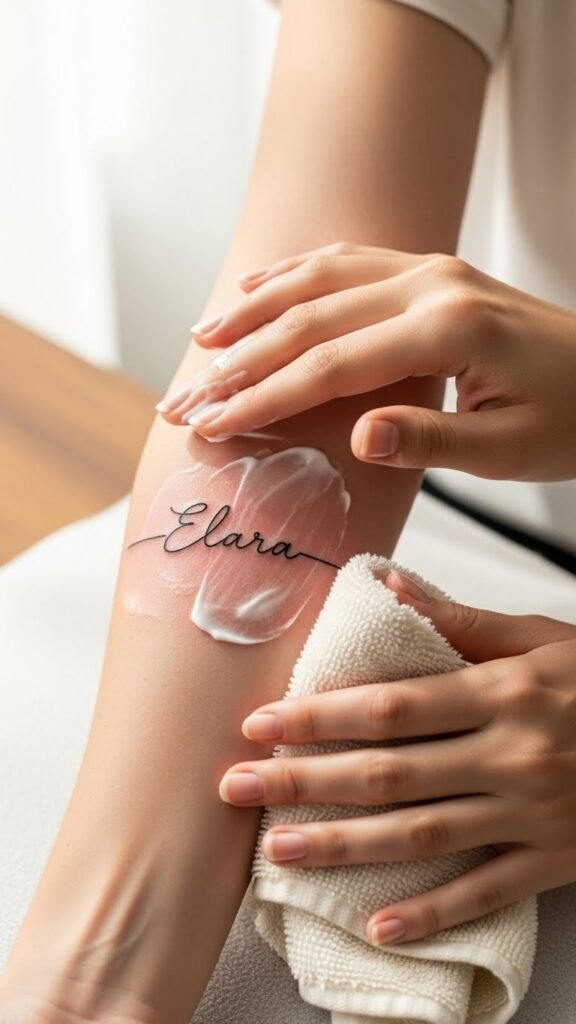
Long-term care tips:
- Follow aftercare instructions closely
- Keep skin moisturized
- Always use sun protection on the tattoo
- Avoid harsh exfoliation over the area
Healthy skin keeps lines sharp and ink looking fresh.
Final Thoughts: Simplicity Is the Secret
Minimalist name tattoos aren’t about trends—they’re about intention. When you focus on meaning, choose clean typography, respect spacing, and work with a skilled artist, you create something quietly powerful.
A well-designed name tattoo doesn’t just look good today—it tells your story beautifully for years to come.
Save this guide for later and come back when you’re ready to design your own timeless piece.

Leave a Reply